
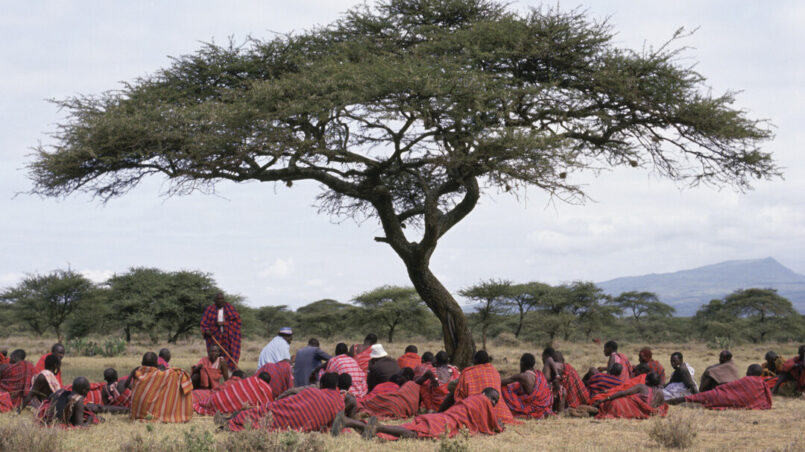
In the diverse matrix of East African societies, the figure of the mzee – a Swahili term reverently used to denote an elder – has long stood as the quintessential embodiment of community wisdom and continuity of ancestral tradition. The venerable image of such individuals is not predicated solely upon the longevity of their existence but rather on the wealth of experience and discernment that is presumed to accompany the advancing years. As per the insights of the renowned scholar John S. Mbiti, the African philosophical landscape often harbours an inextricable link between the accumulation of years and the accrual of sagacity, suggesting a symbiotic growth of age and insight (Mbiti, 1969). Yet, the romanticised ideal of the all-wise mzee is increasingly confronted with the complexities of a rapidly evolving societal fabric, one that is being continuously reshaped by the forces of modernity and global interconnectivity. The once sacrosanct aura surrounding eldership now contends with a milieu of scepticism and reassessment, prompting a deeper philosophical inquiry: What constitutes the essence of eldership in the contemporary East African milieu?
The traditional East African community has often espoused the belief that the natural procession of umri (age) begets hekima (wisdom), asserting a kind of philosophical naturalism that sees wisdom as an almost inevitable offshoot of life’s lengthening shadow. However, amidst the current vortex of social transformations and religious flux, the elder archetype is subject to a more nuanced interrogation. The interfusion of age and virtue, particularly potent within the sphere of religious observance, challenges us to differentiate between the physiological reality of ageing and the more substantive achievement of becoming an elder, esteemed in wisdom and moral guidance. Such a distinction is not merely semantic but is pivotal to understanding the evolving role of the elder in a society where indigenous beliefs harmoniously, and sometimes contentiously, coexist with the doctrines of imported faiths.
To adequately engage with this philosophical enterprise, it is imperative to canvas a wide range of intellectual landscapes, drawing from the deep wells of indigenous knowledge, scholarly debates, and the enduring legacies ensconced in oral and written traditions. This inquiry is not an idle pondering but a crucial intellectual venture that strives to illumine and recast the concept of eldership within the dynamic interplay of past and present. It is through such a reexamination that we may discern how the East African elder, the guardian of ngano (folklore) and the custodian of mila (customs), navigates the currents of change, holding fast to the wisdom of bygone eras while engaging with the emergent challenges and aspirations that modernity bestows.
Thus, our philosophical expedition beckons us to embark upon a journey of understanding that transcends the simplicity of chronological maturation, seeking instead the rich, layered conceptions of wisdom as perceived through the prisms of time, culture, and spirituality. By re-envisioning the figure of the elder within this context, we endeavour to rearticulate their role in a society that venerates both the ancestral wisdom of the Swahili coast and the progressive impulses of the East African Renaissance. This introduction lays the foundation for a discourse that interweaves the veneration of traditional eldership with critical scrutiny, reflecting a continent’s courageous conversation with itself as it strides into the future.
Eldership in African Ethos: Beyond Chronology
In the mosaic of East African life, where the rhythms of community pulse vibrantly, eldership stands as a bastion of cultural and ethical wisdom. Within this context, the stature of an elder transcends the mere passage of time, embodying instead a living repository of communal morality and lore. According to Kwame Gyekye, “The true measure of eldership in African societies is found less in the calculable progression of years and more in the immeasurable depths of moral character” (Gyekye 132). This philosophical perspective posits that the confluence of chronological age and moral wisdom is the crucible within which true eldership is forged, and it is within this synthesis that an individual transcends the ordinary progression of life to assume a role of guidance and stewardship.
In the communalistic framework prevalent in East African societies, the mzee’s role is steeped in an ethos of collective identity and shared values. Here, eldership is not automatically conferred with age but earned through a life demonstrative of uadilifu (integrity) and heshima (respect). Caroline Ifeka reflects on this dynamic, suggesting that “respect for elders is a currency earned through a demonstrated life of integrity and alignment with communal virtues” (Ifeka 200). The journey towards such recognition often involves initiatory rites and the progressive assumption of communal responsibilities, anchoring the individual firmly within their community’s social and moral fabric.
However, this revered institution is not without its challenges and contradictions. Instances arise when the chronological accumulation of years fails to align with a commensurate accrual of moral distinction, thus destabilising the conventionally revered image of the elder. It prompts the philosophical reflection on the essence of eldership and its place within the community. As Kwame Anthony Appiah observes, “The notion of eldership is a constantly evolving narrative, interwoven with the personal and collective experiences that shape the moral terrain of society” (Appiah 167). Such insights highlight the inherent fluidity and contestation surrounding the concept of eldership, reflecting a community’s ongoing discourse on the qualities that truly constitute wisdom and moral authority.
The East African conception of eldership is resilient and dynamic in the dialectic between the age-old traditions and the relentless tide of modernity. As the winds of change sweep across the societal plains, so does the understanding and expression of what it means to be an elder evolve. Yet, through this evolution, the essential ethos endures a harmony of age and virtue that remains the philosophical compass by which societies navigate the intricacies of human existence and morality. This enduring principle casts light upon elders’ evolving roles and perceptions within the vibrant and complex tableau of contemporary East African societies.
Eldership as the Sustaining Arch of Cultural Continuity in East African Societies
In the diverse cultural matrix of East Africa, elders are esteemed not only as the repositories of ancestral wisdom but also as essential custodians of the community’s moral compass and history. They serve as an indelible link between the past and the present, fostering a continuity crucial for the people’s identity. Chinua Achebe captures this role succinctly: “Elders are not merely remnants of the past but are the wielders of the cultural sceptre, essential in the coronation of the future” (Achebe 47). Their role transcends the preservation of history and morphs into an active guardianship of the socio-cultural ethos, ensuring that the societal fabric remains intact despite the relentless march of time and tide of change.
The elders, or wazee stand as the living vessels of oral traditions, those intricate threads that connect the current generation to their lineage. The reliance on oral histories, as opposed to documented chronicles, is eloquently defended by Jan Vansina, who notes, “The oral account, as a conveyer of the past, remains superior in its ability to capture the nuance and lifeblood of the ancestral spirit” (Vansina 64). Through their vivid narrations, the wazee perform the crucial task of ensuring that the ethos, wisdom, and lore of their forebears are inherited in their purest form, an inheritance that is unfiltered by the distortions of interpretation and remains rich in the authenticity of its origin.
In the sphere of governance and societal harmony, the wisdom of the elders is the pillar upon which the traditional mechanisms of conflict resolution rest. Often devoid of the rigidity of written law, these indigenous processes value restorative justice and communal concord over punitive measures. As Ali Mazrui rightly argues, “The council of elders operates not just as a court of adjudication but as a forum for social healing, embodying the collective conscience of the community” (Mazrui 153). Through their deep-rooted understanding of the human condition and the nuances of communal living, these elders navigate the intricacies of social discord, offering solutions that reaffirm the unity and fabric of society.
Moreover, the elders’ participation and oversight sanctify the sacred rites of passage and the sundry rituals that punctuate life’s journey. These rituals, as articulated by Credo Mutwa, “are the milestones of existence, each marked with the ancestral wisdom as imparted by the elder’s benediction” (Mutwa 88). In their role as cultural sentinels, the elders ensure these ceremonies maintain their sanctity and significance, safeguarding the community’s spiritual health and continuity. Through their blessings and guidance, they reinforce the bonds between the individual, the community, and the unseen world of the ancestors.
Thus, in the philosophical context of East African societies, eldership transcends the mere chronology of age and encompasses the broader dimensions of wisdom, cultural fidelity, and ethical stewardship. Their guidance is the rudder that steers the communal vessel through the currents of modernity without losing sight of the ancestral shores. Their enduring influence is a testament to the vibrant continuum of African society, where the past is alive, dialoguing with the present and shaping the contour of the future.
Virtue versus Longevity in East African Wisdom Traditions
Within the rich cultural landscapes of East Africa, the concept of eldership transcends the mere passage of time, symbolising a profound synthesis of accumulated wisdom and moral rectitude. This reverence for the elder is a recognition of their lived experiences and the expectation of their embodiment of virtue. However, as Tempels insightfully notes, “Chronological advancement does not intrinsically confer wisdom or ethical stature” (Tempels 32). This remark echoes a profound philosophical tension, where the chronological age alone does not necessarily correlate with the moral and wise attributes expected of an elder. This dichotomy poses a significant ethical dilemma within communities, where the assumption of wisdom and moral authority by virtue of age alone is increasingly scrutinised.
The paradox of eldership in the context of East African communities becomes particularly salient when considering the complex interplay between cultural expectations and individual morality. The idea of the mzee is built upon a life steeped in virtue, an existence that sets a moral precedent for others to emulate. Okot p’Bitek poignantly captures this quandary when he observes, “There are old men and women who, though chronologically endowed, are morally bankrupt, standing in stark opposition to the cultural archetype of the mzee” (Okot p’Bitek 45). The expectation that one’s chronological seniority should command respect is challenged when juxtaposed against a backdrop of personal actions that contravene the ethos of integrity and ethical leadership quintessential to elders’ revered status.
This philosophical impasse is not merely an abstract concern but one that palpably influences the social dynamics of East African societies. The younger generation, nurtured on the precepts of deference to the elderly, confronts an ethical crossroads where respect based on age is pitted against respect earned through virtuous living. Léopold Sédar Senghor muses on this, stating, “The youth stand at a crossroads where cultural tradition and moral integrity are in contention” (Senghor 28). Such internal conflicts extend beyond the individual, potentially sparking a collective reassessment of the traditional elder archetype, prompting a discourse on the true essence of eldership.
Traversing this intricate terrain requires an understanding that the traditional African notion of eldership, especially within the Swahili cultures of East Africa, represents a confluence of longevity and virtue. The physical evidence of age alone is insufficient. The amalgamation of character and experiential wisdom distinguishes the authentic mzee. As Kwasi Wiredu posits, “The authentic elder, the ‘mzee’, is he who has seasoned longevity with the savoury spices of wisdom and virtue” (Wiredu 112). In this nuanced understanding, the social fabric of East African societies must weave respect for chronological eldership with the demands for moral exemplarity, thus upholding the integrity and relevance of its cultural institutions.
Eldership and the Virtue of Obedience in East African Catholicism
In the sacrosanct halls of East African Catholicism, the notion of ‘elder’ is not a mere chronological station but an esteemed mantle of spiritual authority earned through the profundity of faith and dedication to ecclesiastical service. The term presbyter or elder embodies the quintessence of spiritual maturity, grounding the role of priests and bishops within a framework of divinely ordained stewardship (Ratzinger, Principles of Catholic Theology 1985). These elders act as the mchungaji (shepherds) of their flocks, bridging the celestial and the terrestrial, steering the spiritual odysseys of their congregants with the wisdom of doctrine and tradition.
The vow of utii (obedience), a pivotal tenet within the religious life of East African congregations, anchors the spiritual journey of the faithful. It is an act of profound humility, where the individual novices or seminarians, akin to the devoted wanafunzi (students), pledge to align their will with that of their superiors and, ultimately, with the divine will (Congar, The Meaning of Tradition 1960). This sacred commitment is an expression of communal harmony, an uwiano (balance) that facilitates the unity of the Church and the greater glory of God.
Yet, this revered principle of obedience is not without its spiritual tensions, as it brushes against the grain of personal discernment. Archbishop Desmond Tutu’s poignant musing speaks to the heart of this tension: “Obedience in the religious sphere, while a virtue, must not silence the profound imperatives of personal discernment and moral judgment” (Tutu, No Future Without Forgiveness 1999). Such a statement resonates deeply within the East African ecclesial context, where the mamlaka (authority) of the Church elders must be navigated alongside the haki (right) of individual conscience, especially when the directives given appear to veer from the path of personal ethical convictions (Sullivan, “The Conscience Wars” 2002).
The crux of spiritual life within the East African Catholic tradition is the harmonisation of utii with the inviolable sanctity of individual conscience. It is the delicate dance of aligning oneself with the collective wisdom of the elders while preserving the inner moral compass that each believer must steward. As Henri de Lubac articulates, “Obedience should be an orchestration rather than a suppression of personal moral agency” (Lubac, The Motherhood of the Church 1989). This delicate orchestration is the spiritual symphony that the East African Catholic Church aims to compose, a symphony where the voices of utii and uwiano, authority and conscience, play in concord, echoing through the sacred spaces of faith and community.
Obedience and Integrity in the Cloistered Veil
The monastic tradition in East Africa, steeped in a rich tapestry of cultural and religious confluences, presents a unique embodiment of the vow of obedience, or utii, central to its spiritual ethos. The tension between this vow and the individual’s moral compass, as articulated by St. Thomas Aquinas, captures the essence of the ethical quandary faced by monastics: “Obedience, according to the order of nature, regards the means; for it is by its nature a means of achieving compliance with the rule of wisdom” (Summa Theologica, II-II, q. 104, a. 5). Aquinas’ insight lays the philosophical groundwork for navigating the delicate balance between the submission to spiritual authority and adherence to personal ethical judgment within the confines of religious life.
Instances abound within the cloisters where the lived experiences of perpetually professed members reflect a discordance with the utii they have vowed to uphold, mirroring the broader East African societal respect for hierarchy against the backdrop of personal uadilifu (integrity). This discord often precipitates a moral dissonance, particularly among the novices who seek in their leaders a living reflection of their vows (McBrien, Catholicism, 1980). The resulting moral maze that seminarians/novices must navigate is not unlike the socio-cultural dynamics outside the monastery walls, where leaders are expected to embody both authority and virtue, a reflection of the communal values espoused in Swahili culture.
The Platonic ideal of the philosopher-king, who wields wisdom and virtue in equal measure, resonates with the East African religious life pursuit of a leadership model that transcends mere doctrinal understanding to embrace ethical living (Plato, The Republic, 473c-480a). The gap between this ideal and the reality within the religious community often mirrors the broader societal challenges faced by East African communities, where the figure of the mzee (elder) is expected to personify both experience and moral rectitude, acting as a beacon of hekima (wisdom) and uadilifu for the younger generation.
Drawing from the desert fathers and mothers’ emphasis on inner transformation, young seminarians/religious in East Africa are encouraged to cultivate a rich interior life, which allows for a harmonious balance between the outward expression of utii and the inward adherence to uadilifu. This cultivation of the inner life, akin to the Swahili concept of kujitambua (self-awareness), enables the young seminarians/novices to navigate their spiritual journey with a compass that aligns their external vows with their internal moral convictions, thus upholding the integrity of their religious commitment while traversing the ethical complexities of religious life.
Conclusively, the vibrant cultural landscape of East African societies and the concept of eldership are profoundly transforming. The traditional veneration of elders based on age gives way to a nuanced appreciation that links eldership with the acquisition of wisdom and moral integrity. Modernity and globalisation are challenging the time-honoured roles of elders, propelling a philosophical reevaluation of what it means to be an elder. In this evolving context, true eldership is increasingly seen as a meritocratic status, reflecting a life of virtue, community service, and sagacity. Despite the shifting societal dynamics, the essence of eldership continues to be a cornerstone for cultural identity, moral leadership, and the preservation of ancestral traditions. Elders are emerging as pivotal figures who navigate the delicate balance between the wisdom of the past and the necessities of the present, guiding their communities through the complexities of a rapidly changing world.
This redefinition extends to the religious realm, particularly within East African Catholicism, where eldership signifies a mantle of spiritual authority borne out of deep faith and ecclesiastical commitment. The principles of obedience and personal discernment create a dynamic interplay, reflecting the broader societal discourse on the intersection of communal harmony and individual conscience. The future of eldership in East African Catholicism and broader communities suggests an adaptive approach that respects the depth of tradition while embracing personal ethical autonomy. Elders, whether in secular or sacred capacities, are called to embody the enduring virtues of their cultural heritage and the moral complexities of contemporary life. Their role is pivotal in crafting a future that honours the wisdom of bygone eras while fostering the growth and spiritual integrity of the individual within the communal matrix.


I’m not that much of a internet reeader to be honest
buut your sites reallly nice, keep it up! I’ll go ahead and bookmark your site to come bazck later.
All the best https://66bb4c96e165c.site123.me/
Hi to all, for the reason that I am genuinely keen of
reading this weblog’s post to be updated daily. It includes good
material.