
Kenya, a nation once heralded for its vibrant democracy and robust political discourse, now finds itself at a critical juncture. The recent developments under President William Ruto’s administration have plunged the country into a state of turmoil characterised by protests, disillusionment, and a profound sense of betrayal. The initial optimism that greeted Ruto’s presidency has dissipated, replaced by a growing awareness of the pervasive corruption and misgovernance that plague his tenure. The political manoeuvres, particularly the inclusion of opposition ODM party members into the government, have further muddied the waters, casting a dark shadow over the integrity of Kenya’s democratic institutions.
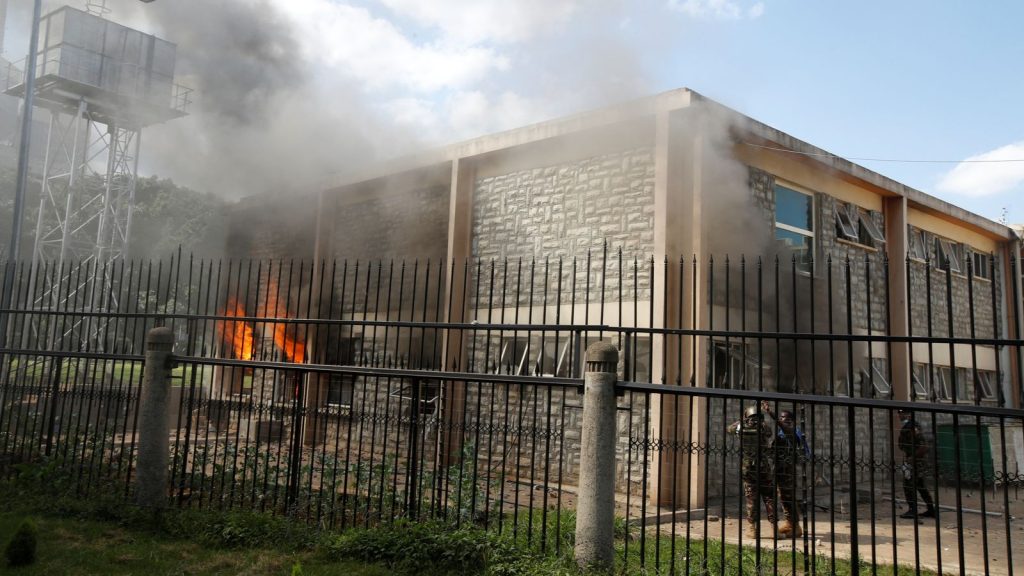
When William Ruto assumed the presidency, many Kenyans dared to hope for a transformative era characterised by transparency, accountability, and a genuine commitment to the common good. Yet, this hope was swiftly dashed as the administration became mired in allegations of corruption. Reports of graft and the misuse of public funds became routine, eroding public trust and fueling a sense of anger and betrayal. The Finance Bill, seen as a punitive measure designed to extract more from an already beleaguered populace, became the flashpoint for widespread discontent. With its tech-savvy and politically astute members, Generation Z rose in defiance, taking to the streets to demand the withdrawal of the Finance Bill, the dismissal of corrupt cabinet ministers, and a renewed commitment to ethical governance. Their protests were not just a cry for economic relief but a call for a fundamental overhaul of a political system that seemed irreparably broken.
In response to this mounting pressure, President Ruto executed a series of high-profile dismissals within his cabinet. Initially perceived as a positive step toward addressing the protesters’ grievances, this move soon revealed to be little more than a cosmetic change. The new cabinet appointments include several figures from the previous administration, raising serious questions about the authenticity of the reforms. Even more startling is the inclusion of ODM party members, some of whom are sitting parliamentarians. This move is seen as an unforgivable betrayal for a party that has long positioned itself as the champion of the people and a vocal critic of government malfeasance. The ODM party leader, Raila Odinga, who has previously stood at the forefront of opposing government atrocities, now appears to be in league with the very forces he had once condemned.
The Azimio coalition, once a beacon of hope for those seeking to hold the government accountable, now lies in tatters. The decision by some coalition members to engage in talks with the government has been met with vehement opposition from both within and outside the coalition. Generation Z, in particular, views this as a capitulation and a betrayal of the principles for which they are fighting so hard. This fragmentation of the opposition has profound implications for Kenya’s political future. The opposition, which should serve as a vital check on governmental power, is now seen as compromised. The ethical governance that Kenyans so desperately yearn for seems more elusive than ever, pushing the country further into a state of despair.
Amid this political disarray, Generation Z has emerged as the de facto opposition in Kenya. Disillusioned by traditional political parties and their apparent complicity in the corrupt practices of the government, the youth have taken it upon themselves to advocate for change. They continue to voice their demands and hold the government accountable through social media and grassroots mobilisation. This shift signifies a broader trend in global politics where young people are increasingly assuming active roles in political advocacy. Yet, the challenges they face are formidable. Without the backing of established political structures, their efforts often seem like an uphill battle against a deeply entrenched and corrupt system.
The current state of affairs in Kenya raises critical questions about the future of its democracy. Are the opposition parties, once the bastions of hope and accountability, now too compromised to fulfil their roles? What does the co-option of opposition members into the government say about the state of ethical governance in Kenya? The answers to these questions lie in the actions of ordinary Kenyans, particularly the youth. It is evident that the country is at a critical juncture where the principles of democracy and good governance must be reclaimed.
The betrayal felt by former ODM members and the broader public underscores the need for a new political paradigm that prioritises the people’s needs over the interests of the political elite. Kenya’s descent into what many now term a “banana republic” is a stark reminder of the fragility of democratic institutions. The recent political developments highlight the urgent need for comprehensive reforms that go beyond superficial cabinet reshuffles. As Generation Z continues to lead the charge for change, it is imperative for all Kenyans to rally behind the cause of ethical governance. The betrayal by the ODM party and the subsequent political realignments should serve as a wake-up call. Kenya’s future depends on the collective efforts of its people to demand accountability, transparency, and genuine democratic reforms.
Drawing from the wisdom of political philosophers, one cannot help but recall the words of John Locke, who argued that the primary role of government is to protect the natural rights of its citizens: life, liberty, and property. Locke contended that when a government fails in this fundamental duty, the people have the right and the obligation to resist and institute a new government. Similarly, the writings of Thomas Paine in The Rights of Man remind us that the authority of a government is derived from the consent of the governed. When that consent is withdrawn, the legitimacy of the government collapses. In this context, Generation Z’s actions are not merely acts of rebellion but a reassertion of their rightful sovereignty over a government that has lost its moral compass.
Kenya’s journey toward reclaiming its democratic ideals is fraught with challenges, but the resilience and determination of its people offer a glimmer of hope. It is a call to action for all Kenyans to rise above the political malaise and work towards a brighter, more just future for all. The actual test of a democracy lies not in the words of its leaders but in the actions of its citizens. Kenya’s struggle is a testament to its people’s enduring spirit and unwavering commitment to justice and ethical governance.


What is the reaction of the remaining Azimio principals?