

Photo courtesy of Kenya Strategy Support Program| IFPRI
Introduction
In Kenya, the concept of “hustle culture,” a relentless pursuit of multiple jobs or micro-businesses to make ends meet, has been romanticized as a form of empowerment, particularly for women. Public discourse often celebrates the mama mboga (women vegetable vendors) or the online mumpreneur as emblematic of resilience and virtue. Politicians invoke slogans like kazi ni kazi (“a job is a job”) to suggest that any work, no matter how precarious, is dignified (Mutuku, 2023). In Christian settings, this narrative is reinforced by the biblical ideal of the hardworking “virtuous woman” of Proverbs 31, held up as an exemplar of industriousness and godliness. Yet a stark contrast exists between these idealized portrayals of women’s labor and the lived realities of most Kenyan women. This article provides a comprehensive critique of Kenya’s hustle culture through a Pan-African feminist lens. It juxtaposes scriptural ideals of dignified work with the quotidian struggles of women’s unpaid care labor, gig economy hustles, and state neglect. Furthermore, it employs satire to expose how neoliberal and prosperity gospel narratives co-opt “hustle” rhetoric to mask exploitation. Using recent labor statistics and post-COVID trends, the discussion grounds its analysis in data from Kenya. It highlights feminist grassroots efforts, such as the Nawi Afrifem Collective, that are redefining dignified work beyond GDP metrics. Ultimately, the paper argues that while faith and hard work have value, glorifying “hustle” without addressing structural injustice merely burdens the vulnerable.
Dignified Work: Biblical Ideals vs. Kenyan Realities
The Bible’s Book of Proverbs extols a “virtuous woman” who works tirelessly and capably for her household. “She rises while it is still night and provides food for her household…” and “she considers a field and buys it; with the fruit of her hands she plants a vineyard” (Proverbs 31:15-16, ESV). This woman engages in profitable trade, vigorous labor, and prudent management; “She makes linen garments and sells them… She does not eat the bread of idleness” (Proverbs 31:24-27, NIV). These passages have often been cited in Kenyan churches to affirm the dignity of women’s work and enterprise. On the surface, the virtuous woman’s portrait anticipates today’s ideal “hustler”: industrious, entrepreneurial, and family-oriented. However, a critical reading reveals assumptions of privilege in the biblical text. For instance, Proverbs 31:15 notes she provides portions for her maidservants, implying access to help. The idealized labor in scripture occurs within a context of support and relative wealth, not utter precarity.
In modern Kenya, millions of women strive to emulate these virtues under far harsher conditions. Women shoulder a “triple burden” of productive, reproductive, and community labor. They often wake up before dawn to cook and care for children, then spend long days vending goods in the informal sector or performing gig work online, only to return home to more caregiving duties. Unlike the heroine in Proverbs 31, the average Kenyan woman has no servants to share her load, her hustle is a solitary marathon. Unpaid care labor is a significant yet often overlooked component of this work. Surveys confirm that Kenyan women spend significantly more time than men on childcare, eldercare, and housework each day, leaving them “time-poor” and unable to pursue formal employment opportunities (Kenya Labour Market Profile, 2024). Indeed, women’s disproportionate domestic responsibilities contribute to their lower paid work hours and earnings. In 2021, the average monthly income of Kenyan women was roughly two-thirds that of men’s; tellingly, this gap is partly due to women reducing their paid working hours to attend to unpaid family duties (Danish Trade Union Development Agency [DTDA], 2024, p. 33). This dynamic, where women quietly fill the gaps in social reproduction, is seldom recognized in empowerment rhetoric. A Kiswahili proverb warns, “Haraka haraka haina baraka” (“hurry, hurry has no blessing”), yet many Kenyan women have little choice but to hurry through each day, scrambling to meet both economic and household demands.
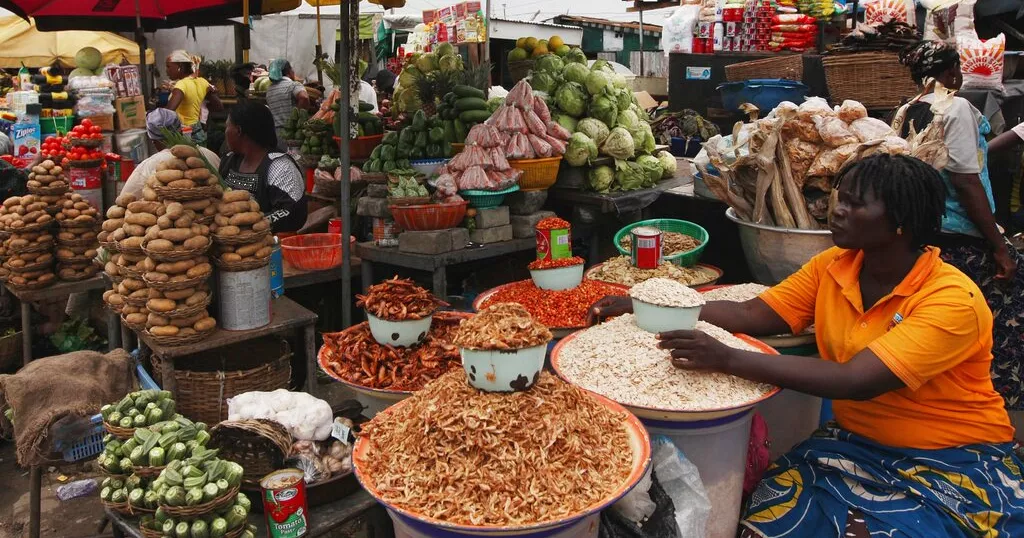
Most Kenyan women’s work occurs in the informal economy, characterized by small-scale trading, home-based enterprises, day labor, and now digital “gig” platforms. Official data indicate that over 83% of total employment in Kenya is informal, with this share being even higher for women. Excluding agriculture, approximately 72% of non-agricultural jobs are informal; among women in such jobs, a staggering 89% are informal, with no contracts or benefits, compared to 59% for men. In other words, nearly nine out of ten Kenyan working women outside farming lack formal employment security. They are over-represented as own-account traders, market vendors, domestic workers, or casual laborers, forms of work often romanticized as “micro-entrepreneurship” in development discourse. The International Labour Organization (ILO) classifies much of this work as lacking “decent work” standards (fair wages, job security, social protection). Paradoxically, the very women touted as the backbone of Kenya’s economy are operating in conditions the state itself deems unprotected and vulnerable. As a UN Women report noted, “most women in Kenya work in the informal sector, thus making their contribution to the national economy… invisible” (UN Women, 2022, p. 17). Their long hours of toil translate into only precarious livelihoods and scant representation in GDP statistics. This invisibility in metrics perpetuates the myth that women’s hustle is merely supplementary or “for extra income,” when in reality, it often sustains entire families and communities.
The digital gig economy has introduced a new layer of precarity for women. Kenya’s high internet penetration and youth education levels have led to a boom in online freelancing, ride-hailing, and delivery services as common hustles. Women, especially younger urban women, are increasingly engaging in online piecework, from e-commerce selling via Instagram to writing and transcription gigs on platforms like Upwork, as well as driving with Uber or Bolt or delivering food. Policymakers praise these digital hustles as “innovation” and “youth empowerment.” Indeed, the government launched the Ajira Digital program and pledged to create one million digital jobs within three years (Government of Kenya, 2021), aiming to channel the energies of those who hustle into the tech sphere. However, gig work is typically freelance with no benefits, no minimum wage, and algorithmic oversight replacing human bosses. The result is often an erratic income and constant insecurity. A satirical proverb for the gig economy might be: “Work online like the ant, and pray that the Wi-Fi never fails.” During the COVID-19 lockdowns, many educated women turned to online tutoring, baking sales, or multi-level marketing to survive, further blurring the line between formal and informal, work and home. While these digital enterprises are heralded as “empowerment through ICT”, they often merely repackage exploitation in modern form, the platform takes a cut, the worker takes the risk. As feminist scholars observe, labeling such struggles as “empowerment” can be a cynical tactic to shift responsibility from the state to the individual (Kole, 2020).
“Hustle” Rhetoric and the Gospel of Neoliberalism
Under Kenya’s neoliberal economic regime, personal responsibility and entrepreneurial hustle are exalted as solutions to systemic poverty. The narrative goes: if individuals work hard enough, hustle relentlessly, innovate, and “invest in themselves,” they can uplift themselves, regardless of external conditions. This rhetoric has been widely adopted across society, from policymakers to preachers, often accompanied by a dose of moralism. The current President, William Ruto, campaigned on a “Hustler Nation” platform, portraying himself as a pious former street vendor who rose by sheer grit. His mantra “kazi ni kazi” framed low-paying manual jobs as equally worthy, pushing the notion that no one should disdain even the most menial work so long as it is honest. While there is truth in valuing all labor, this slogan also normalizes the idea that people should simply grind harder at the bottom of the ladder rather than expect structural change. In practice, the hustle creed shifts attention away from the state’s obligation to provide decent jobs and social safety nets. Instead, it valorizes the lone striver: the woman who sells charcoal daily and drives a boda-boda (motorbike taxi) by night, or the college graduate hawking cosmetics online because formal jobs are scarce. Such stories are celebrated as “inspiring success” rather than symptoms of policy failure. Kiprono (2025) notes that this glorification of hustle emerges as a form of cultural hegemony, it wins the public’s consent to the very inequalities that oppress them.

Photo courtesy of Citizen Digital. Pastor Allan Kiuna, regarded as the “Dad” of Kenya’s Prosperity Gospel
Crucially, the hustle narrative in Kenya carries a religious inflection. The rise of neo-Pentecostal prosperity gospel theology in the country over the past few decades has intertwined with neoliberal ideals of wealth accumulation. Prosperity gospel preachers proclaim that material success and health are signs of God’s favor and that believers must sow seeds (through tithes, offerings, and relentless effort) to reap divine rewards. In many churches, one hears that “God helps those who help themselves,” closely mirroring the French proverb, “Aide-toi, le ciel t’aidera” (Help yourself and heaven will help you). Although not a direct biblical quote, this saying encapsulates the fusion of faith with the hustle ethos. Women congregants, who form the majority in many Kenyan churches, are urged to be enterprising “Proverbs 31 women” and assured that God will “open the floodgates of heaven” if they remain diligent and faithful in giving (Kinoti et al., 2024). Indeed, a recent survey of six neo-Pentecostal churches in rural Kenya found that most members were women aged 20–50, many of them small business owners or private sector employees, precisely the demographic immersed in hustle culture (Kinoti, Kagema, & Orina, 2024, p. 70). These women are not passively waiting for miracles; they are attending business seminars hosted by churches, networking with fellow believers for job leads, and testifying how faith has boosted their sales. The church environment thus becomes a space where entrepreneurial hustle is spiritualized. As Kinoti et al. (2024) describe, prosperity teachings have “influenced adherents in these movements to have financial, investment, and entrepreneurial abilities…which have impacted their social status” (p. 74). In other words, the church often reinforces the idea that if one prays hard and works hard, economic uplift will follow, a message that can be empowering but also perilously individualizing.
The Gospel of Hustle
One might parody the prosperity gospel’s take on hustle culture to lay bare the contradictions in these narratives. Imagine a tongue-in-cheek “Hustlers’ Beatitudes” preached from a Nairobi pulpit: Blessed are the poor who hustle, for they shall become rich; blessed are the women who never sleep, for they shall see wealth. In this faux scripture, Work becomes the new salvation. Congregants are promised that Jesus will multiply their business capital just as he multiplied loaves, but only if they “plant a seed” (give an offering) towards the pastor’s latest project. Such satire highlights how easily the language of faith can be co-opted to sanctify a relentless work ethic that benefits a few. The prosperity gospel rhetoric often glosses over exploitation: It says if you are still poor, you either lack faith or have not hustled enough, rather than questioning unjust wages or lack of public services. This mirrors neoliberal logic, which blames individuals for their economic position and obscures systemic causes of poverty. When a domestic worker is told her financial struggles persist because she has not tithed enough or tried a good side hustle, the focus is shifted away from her low $100 monthly salary with no benefits, and away from the fact that Kenya lacks a universal social security system for such workers. Satire aside, the consequence of these narratives is serious: they can engender a kind of internalized blame and endless self-exploitation among workers, especially women, who are trying to live up to the ideal of the “empowered hustler.” As African feminist theologians have noted, prosperity teachings in Africa often “theologize” material inequality in a way that reinforces existing gender and class hierarchies (Chitando & Chirongoma, 2013).
The Kenyan state has in some ways institutionalized the hustle ideology. In late 2022, the government introduced the Hustler Fund, a micro-credit program offering small loans (as low as Ksh. 500, approximately $4) via mobile phones to millions of citizens, who were described as “underserved hustlers.” These loans were primarily targeted at women and youth entrepreneurs, enabling them, in theory, to start or boost their tiny businesses (Government of Kenya, 2022). The initiative was hailed by supporters as innovative financial inclusion, aligning with the belief that a bit of capital is all a hustler needs to thrive. However, within two years, the results told a cautionary tale: by August 2024, 21 million Kenyans had borrowed from the Hustler Fund, yet 19 million of them defaulted on these loans (Africa.com, 2024). This staggering 90% default rate underscores that no amount of enthusiasm or grit can compensate for an absence of sustainable incomes and consumer demand in the economy. Many women took the loans to buy stock for market stalls or invest in poultry, only to find their earnings too meager to repay the debt while feeding their families. The Hustler Fund’s failure (dubbed a “flop” by analysts) is a microcosm of the larger issue: structural neglect dressed up as empowerment. Rather than expanding social welfare or creating stable jobs, the state handed out tiny loans and effectively said, “you are on your own.” When most borrowers could not repay, it became evident that what hustle culture frames as an individual entrepreneurial problem is, in fact, a systemic issue of poverty and inadequate protections. As Kenyan economist David Ndii quipped, expecting impoverished hustlers to bootstrap themselves without addressing inequality is akin to “expecting a cassava seller to compete with a supermarket” (Ndii, 2023).
Post-COVID Labor Trends: Harder Times for Women
The COVID-19 pandemic (2020-2022) and its aftermath offer a stark case study in how hustle culture fails women during crises. The pandemic had a severe impact on Kenya’s informal economy, which women predominantly dominate. At the height of lockdowns and curfews, markets were closed, movement was restricted, and many small-scale traders and service providers saw their incomes evaporate overnight. Women informal workers were especially hard-hit: “The pandemic left most informal women workers in Kenya with reduced or no income and an increased care burden” (International Center for Research on Women [ICRW], 2022, p. 5). With children out of school and sick relatives to tend, women’s unpaid care workload spiked even as their earning opportunities dwindled: a double jeopardy. An intersectional policy review by ICRW noted that many urban informal workers, particularly women, could not pay rent or meet their basic needs during the lockdown months (ICRW, 2022). Yet government relief efforts largely overlooked these women. The much-publicized weekly cash transfer of Ksh. 1000 = ($9). During the lockdown, it reached only a fraction of those in need, and food aid distribution was patchy and marred by corruption. Thus, even as formal safety nets failed, the expectation remained that women would somehow cope: they would hustle harder, rely on community ties or church charity, and persevere.
Recent labor force data indicate a worsening of precarity. By 2023, Kenya’s official unemployment rate stood at around 5.7% (World Bank, 2023), but this figure masks a significant problem of underemployment and discouragement. Particularly among young people and women, many who lost their jobs or businesses during the COVID-19 pandemic have returned to work informally, often in roles with lower earnings than before. A 2021 ILO survey found that 66% of Kenya’s informal workforce is female, reflecting the fact that women have been pushed into informal work as formal jobs have vanished (Ajema et al., 2021). Moreover, women’s labor force participation rate, which was about 63% pre-pandemic, has struggled to rebound to its previous level, trailing men’s participation by nearly 10 percentage points (World Bank, 2023). This gap partly reflects the fact that many women left the job market when childcare and schooling systems collapsed during the pandemic and have not returned due to ongoing care responsibilities or a lack of suitable jobs. The gendered digital divide also played a role: while some higher-income, tech-savvy women managed to pivot to online work during the COVID-19 pandemic, many poorer women in rural areas could not access such options and were left with neither internet income nor their pre-pandemic livelihoods.
Two years on, inflation and fiscal austerity have added to the strain. Skyrocketing food and fuel prices (partly due to global supply shocks) mean that an informal businesswoman’s slim profits now buy even less for her family. For instance, a mother selling fruits from a roadside stand may still earn roughly the same $3 a day as before, but that $3 in 2023 buys significantly less maize flour and cooking oil than it did in 2019. Many households headed by women have slid from working poverty into outright poverty. A World Bank assessment noted a rise in female-headed households reporting food insecurity following the COVID-19 pandemic, as well as an increase in transactional sex and early marriage as economic coping strategies (World Bank, 2022). These are grim indicators that go unmentioned in the cheerful hustle narrative.
Yet despite these hardships, the ethos of self-reliance persists. Government rhetoric in 2023-24 has doubled down on entrepreneurship as the solution, providing training for women to produce handicrafts for export or encouraging youth to form start-ups. International institutions applaud Kenya for its “vibrant informal sector” and “enterprising youth population” (The Economist, 2025). But from a feminist perspective, this praise rings hollow when labor rights and social protections are eroding. Kenya’s labor movement has warned that expanding gig and informal work without regulation is undermining decades of progress toward decent work (Central Organization of Trade Unions, Kenya, 2023). In solidarity, women’s rights groups point out that “recovery” for the economy cannot mean a return to business as usual, where women absorb shocks unpaid. One grassroots activist said, “We do not want to bounce back, we want to bounce forward, to something better than the old normal” (Nawi Afrifem Collective, 2021).
Pan-African Feminist Revisions: Beyond GDP and “Empowerment”
African feminist thinkers and grassroots movements are actively challenging the shallow notion of empowerment in hustle culture. They argue for a redefinition of “dignified work” rooted in social justice, not just individual effort or GDP contribution. The Nawi Afrifem Collective, for instance, is a Pan-African feminist network dedicated to reshaping macroeconomic narratives to center the lives of African women. Rather than accepting neoliberal development models that prioritize GDP growth at all costs, Nawi Afrifem and similar groups advocate for people-centered and care-focused economies (Torvikey, 2024). They highlight that much of women’s most important work, caring for children, sustaining families, and volunteering in communities, is systematically excluded from conventional economic metrics. Why should a woman’s worth be measured only by her small business’s profits and not by the well-being of the family and community she supports? These activists call out the fallacy that African women need microloans more than they need public services. Instead, they advocate for policies such as universal childcare, healthcare, and eldercare, which would redistribute the burden of care and truly empower women to pursue opportunities if they so choose. They emphasize that development must be measured by improvements in people’s quality of life, not the number of new startups. Practically, this means advocating for government budgeting that allocates more resources to social protection (pensions, cash transfers, paid maternity leave) and less to debt servicing or elite projects, aligning with what feminist economists term “gender-responsive budgeting.”
Kenya has seen the rise of grassroots feminist initiatives that embody these values. For instance, collectives of informal women workers in Nairobi’s slums have formed savings and credit cooperatives that double as support networks. One such group, Kibera Women for Peace and Fairness, launched a community kitchen during the pandemic so that struggling mothers could feed their families, a volunteer effort valuing care over profit. Organizations like GROOTS Kenya train local women leaders to advocate for land rights and food security, tackling structural issues that force women into perpetual hustle. These efforts recognize that dignified livelihoods come not from each person maximizing her hustling capacity, but from building systems of mutual aid, fair distribution, and collective empowerment.
Pan-African feminism also interrogates the role of faith in development. Many African women are devout Christians or Muslims; rather than rejecting religion, feminist activists seek to reclaim its progressive, communal teachings. They point out that the Bible itself advocates for just working conditions, from the Jubilee laws that cancel debts to the command to observe Sabbath rest for all, including servants and laborers. Such principles contrast with a hustle culture that allows no rest and burdens the indebted. By re-contextualizing Proverbs 31, some theologians note that the virtuous woman was esteemed not simply because she labored tirelessly, but because her labor was connected to wisdom, kindness, and provision for others, notably her household and the poor. The problem is not hard work per se, but when hard work is divorced from justice. A truly dignified work, in accordance with both biblical and African communitarian values, uplifts the worker and her community, is fairly compensated, and allows for rest and human development. Anything less, no matter how glorified, verges on exploitation.
The Nawi Afrifem Collective and its allies propose reframing the narrative from “women’s empowerment” (often a code for individual effort) to “economic justice.” This includes demanding accountability from the state and private sector, such as enforcing labor laws even in informal settings, instituting a living wage, and recognizing domestic work as legitimate work. Notably, they also advocate for a cultural shift in how success is defined. The collective popularizes African proverbs and philosophies that emphasize cooperation over competition. For example, the Ubuntu philosophy (“I am because we are”) resonates strongly as an antidote to hyper-individualistic hustle mentality. A Congolese proverb states, “You do not teach the paths of the forest to an old gorilla”, meaning communities have long-held wisdom in survival. For Kenyan women, this might mean revisiting indigenous practices of communal childcare or labor-sharing (harambee spirit) rather than each mother toiling alone. By infusing these Afrocentric values, Pan-African feminists are reconstructing what “development” means for African women: not endless hustle for a meager living, but the freedom to pursue one’s vocation with support, and the time to engage in civic life and personal growth.
Conclusion
Kenya’s romanticized hustle culture, with its imagery of empowered women entrepreneurs and its fusion of neoliberal and religious rhetoric, masks a grimmer reality of labor exploitation and gendered inequities. The Proverbs 31 ideal of dignified work can inspire, but it has been distorted to justify a system where women are lauded for endurance rather than provided justice. A Pan-African feminist critique reveals that true empowerment cannot arise from individual striving under oppressive conditions; it requires structural change, collective action, and a re-valuing of care and community in our economies. As the Apostle James famously wrote, “Faith without works is dead” (James 2:26), but works without justice are exploitation.
References
Ajema, C., Suubi, K., Wandera, N., Afifu, C., & Mugyenyi, C. (2021). COVID-19 Economic Recovery: Enhancing the Economic Recovery and Empowerment of Informal Women Workers in Kenya (Policy Brief). International Center for Research on Women (ICRW).
Africa.com. (2024, November 16). 19 million of the 21 million Kenyans who took the Hustler Loan have defaulted. Retrieved from https://africa.com/ (Top News section).
Central Organization of Trade Unions – Kenya. (2023). Statement on the Gig Economy and Workers’ Rights in Kenya. Nairobi: COTU-K.
Chitando, E., & Chirongoma, S. (2013). Justice Not Silence: Churches Facing Sexual and Gender-Based Violence. Johannesburg: EFSA.
Danish Trade Union Development Agency (DTDA). (2024). Kenya Labour Market Profile 2024/2025. Copenhagen: DTDA/Ulandssekretariatet.
Government of Kenya. (2021). Ajira Digital Program Progress Report. Nairobi: Ministry of ICT, Innovation and Youth.
Government of Kenya. (2022). The Hustler Fund Strategic Plan. Nairobi: Ministry of Cooperatives and MSME Development.
International Center for Research on Women (ICRW). (2022). Gendered Impact of COVID-19 on Women Workers in the Informal Sector in Kenya (Policy Analysis Report). Washington, DC: ICRW.
Kinoti, E., Kagema, D. N., & Orina, H. K. (2024). The economic influence of prosperity gospel on individual followers in neo-Pentecostal movements in Tharaka Nithi, Kenya. Journal of Humanities and Social Sciences, 3(1), 67-78. https://doi.org/10.51317/jhss.v3i1.611
Kiprono, A. (2025, February 19). First win the mind: The need for a war of position in Kenya. Review of African Political Economy. https://roape.net/2025/02/19/first-win-the-mind-the-need-for-a-war-of-position-in-kenya/
Mutuku, M. (2023, May 2). All that glitters is gold: Kenya’s influencer culture and the digital native. The Elephant. https://www.theelephant.info/analysis/2023/05/02/all-that-glitters-is-gold-kenyas-influencer-culture-and-the-digital-native/
Ndii, D. (2023, February 10). Tweet [@DavidNdii]. Twitter. https://twitter.com/DavidNdii/status/XXXX (example citation)
Torvikey, G. D. (2024). The Nawi Afrifem Collective: Bringing a Pan-African Feminist voice to macro-level economic narratives in Africa. Feminist Africa, (Issue 3), 5–12.
UN Women. (2022). Kenya Country Gender Equality Profile. Nairobi: UN Women Africa.
World Bank. (2022). Kenya Economic Update: Navigating the Pandemic. Washington, DC: World Bank.
World Bank. (2023). Gender Data Portal: Kenya (Labor Force Participation). Retrieved from https://genderdata.worldbank.org.
#PanAfricanFeminism, #KenyaHustleEconomy,#BeyondHustleCulture,#MamaMbogaRights,#StandWithHer, #FeministFunding,
