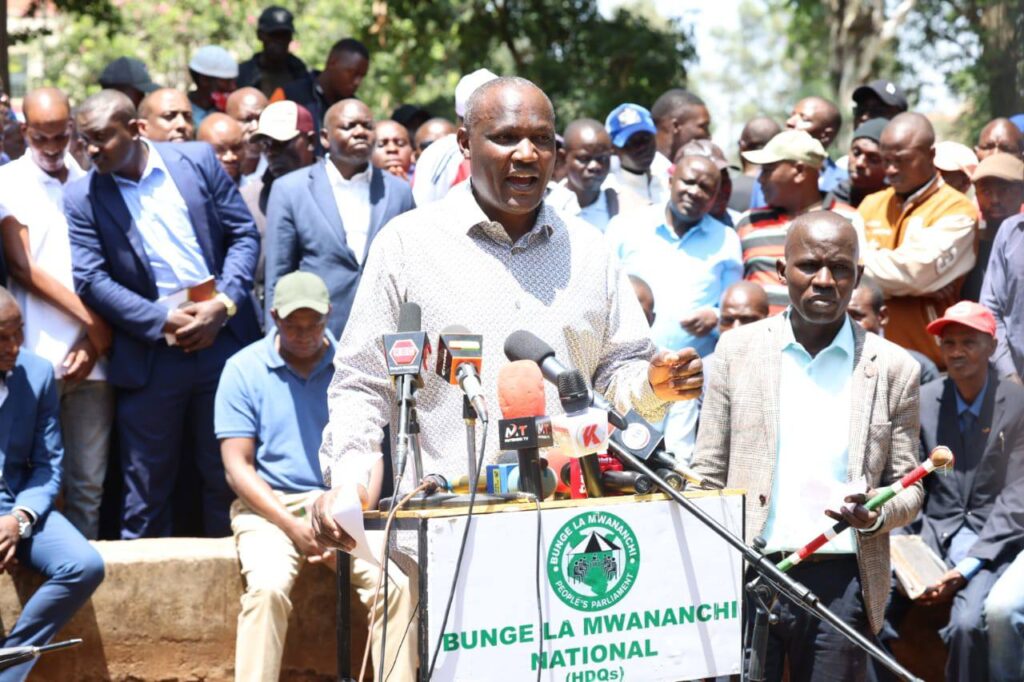
In a bold move towards rebuilding trust between the government and its citizens, Kenya’s National Treasury Cabinet Secretary, Hon. John Mbadi, alongside the Chairman of the Kenya Revenue Authority (KRA), hosted a public participation forum at Jeevanjee Gardens in Nairobi. This event focused on financial matters, representing a remarkable departure from traditional modes of governance. It was not merely a government function but a landmark moment in Kenya’s democratic journey, underscoring the importance of public participation as a cornerstone of transparent and accountable governance. The forum united citizens and leaders in a dialogue demonstrating the transformative power of openness and the collective commitment to addressing national challenges.
The Jeevanjee Gardens forum indicated that Kenya is moving towards a culture of transparency and openness in governance. It provided an unprecedented opportunity for Kenyans to ask hard-hitting questions, seek clarity, and demand accountability from their leaders. Unlike many events where leaders offer rehearsed speeches and avoid contentious issues, this forum allowed citizens to confront their leaders directly, ensuring a two way dialogue rather than a top down dissemination of information. One of the key issues raised during the event was Hon. Mbadi’s frequent use of helicopters for official travel. This question struck a chord with many citizens, given the prevailing economic challenges in the country. Mbadi’s response that his demanding schedule and the notorious traffic congestion in Nairobi necessitate such travel provided an example of transparency. While not all citizens were satisfied with his justification, the fact that the issue was addressed openly marked a departure from the culture of secrecy that has often characterised government operations in Kenya. Similarly, participants raised concerns about the costs of renovating the State House, which has long been shrouded in mystery. While Mbadi’s response was less forthcoming on this issue, his willingness to engage on controversial topics was a significant step towards fostering a culture of accountability. These exchanges underscored the importance of forums like this in demystifying government operations and bridging the trust gap between leaders and citizens.
Public participation is not a mere formality but the essence of democracy. Through such engagements, citizens can hold their leaders accountable, voice their concerns, and contribute to the decision-making processes that shape their lives. The Jeevanjee Gardens forum exemplified the potential of public participation to transform governance. From tax collection and budget allocation to corruption and government inefficiencies, the discussions were enlightening and empowering. Kenyans who attended the forum demonstrated a remarkable understanding of national issues, posing insightful questions that reflected their desire for a more accountable government. Engaging with grassroots movements like Bunge la Wananchi (the People’s Parliament) further highlighted the importance of involving ordinary citizens in governance. Such interactions ensure that grassroots voices are heard, fostering a sense of ownership and inclusion in national affairs. Hon. Mbadi’s willingness to step out of his office and meet citizens on their turf was a courageous move many leaders would shy away from. His openness set a new standard for public engagement in a political climate where leaders often avoid direct scrutiny. It demonstrated that leaders who are transparent and willing to face tough questions can inspire confidence and foster trust among their constituents.
One of the most pressing issues raised during the forum was corruption within government institutions. This topic has long been a thorn in Kenya’s side, eroding public trust and undermining national development. Although specific details of Hon. Mbadi’s responses were not documented, the open forum allowed citizens to voice their frustrations and demand accountability directly. The Kenya Revenue Authority (KRA) also came under scrutiny, with participants questioning its efficiency and the perceived lack of fairness in tax collection. The KRA Chairman took the opportunity to shed light on the agency’s challenges, emphasising the importance of taxes in national development. By demystifying the tax collection process and addressing concerns about corruption, the KRA aimed to rebuild public confidence in its operations. Such transparency is crucial in ensuring that citizens understand the value of their contributions and are willing to support the government’s development agenda.
Trust between the government and its citizens is not a given; it is earned through consistent actions that prioritise transparency, accountability, and responsiveness. For too long, Kenyans have felt alienated from the institutions meant to serve them, with corruption, inefficiency, and a lack of openness contributing to a deep-seated distrust. Events like the Jeevanjee Gardens forum are critical in reversing this trend. To win back public confidence, the government must embrace a culture of openness as a continuous process rather than a one-time event. This means regularly engaging with citizens, providing timely and accurate information, and creating platforms for constructive dialogue. It also means acting on the feedback received and demonstrating tangible results. Transparency should not be seen as a public relations strategy but as an integral part of governance.
While the Jeevanjee Gardens forum was a significant step forward, maintaining this momentum requires consistent and meaningful engagement. Leaders must go beyond token gestures and embrace genuine dialogue with citizens. They must be willing to confront uncomfortable truths, acknowledge mistakes, and take corrective action. Transparency should not be an occasional occurrence but a permanent feature of governance. Institutions like the KRA play a pivotal role in this journey. Beyond addressing immediate concerns, they must work towards long-term reforms that enhance efficiency, reduce corruption, and improve service delivery. By doing so, they can build a more transparent and accountable government that inspires trust and confidence among citizens.
Leaders are servants of the people, and their primary responsibility is to serve with integrity, humility, and accountability. Engaging the electorate is not a favour; it is a duty. Leaders must be accessible, approachable, and responsive to the needs of their constituents. They must create opportunities for dialogue, whether through public forums, town hall meetings, or digital platforms. They must listen more than they speak, and when they do speak, their words must be backed by action. Hon. Mbadi’s engagement with Bunge la Wananchi is a model worth emulating. By stepping out of the comfort of government offices and meeting citizens where they are, he demonstrated a willingness to connect with the people he serves. This is the kind of leadership Kenya needs, that is transparent, accountable, and responsive to the needs of the people.
The Jeevanjee Gardens forum was more than just an event; it was a call to action for both leaders and citizens. It reminded Kenyans of their role as active participants in governance and highlighted the importance of transparency and accountability in building a better nation. As citizens, we must take responsibility for holding our leaders accountable. We must educate ourselves on matters of national importance, demand transparency, and engage in constructive dialogue. We must be vigilant in ensuring that promises translate into actions and that leaders prioritise the people’s interests above all else. To the government, the message is clear: the era of opaque operations and top-down decision-making is over. Public participation must become the norm, not the exception. Leaders must embrace openness, not as a strategy to win votes but as a commitment to democratic governance. They must act on the feedback received, demonstrate tangible results, and nurture the trust they have worked hard to earn.
The journey towards a more transparent and accountable government has begun, but it is far from over. Yesterday’s event at Jeevanjee Gardens was a glimpse into what Kenya can become; a nation where the government and the people work hand in hand to achieve shared prosperity. It demonstrated that transparency and accountability are not just ideals but practical tools for fostering trust and driving national development. By embracing transparency, fostering trust, and engaging meaningfully with citizens, Kenya can pave the way for a brighter, more inclusive future. Let us build on this momentum and work towards a nation where every Kenyan feels heard, valued, and empowered. The journey ahead is long, but we must undertake it together, united in our commitment to a better Kenya.
#TransparencyInGovernance
#PublicParticipation
#AccountabilityMatters